

One shoot day. 15 to 30 usable assets in your video content library. Months of content ready to post across every platform your business uses.
That’s what becomes possible when you stop planning a video shoot around a single deliverable and start planning it around a content library. But its success hinges on an efficient strategy. And it starts long before anyone sets foot on set.
Here’s how to plan a shoot day that produces more than one video, and how Studio Spero helps clients build content libraries that power their video marketing for months at a time.
Key Takeaways
- Most businesses under-use their shoot days by planning for one video instead of a full content library—a mindset shift changes everything.
- Pre-production is where a multi-asset shoot is won or lost: content pillars, talent preparation and platform formats all need to be defined before cameras roll
- A well-planned eight-hour shoot can realistically produce 15 to 30 usable assets, including a hero video, social clips, testimonials, b-roll and behind-the-scenes content
- Structure shoot day around location changes, not content types—everything in one space before moving on saves significant time.
- Post-production is where raw footage becomes a content library: hero video first, then platform cuts, soundbite clips and organized b-roll packages.
- Working with a creative partner rather than just a videographer is what separates a single video from a full content strategy.
Why Create an Entire Video Content Library in One Shoot?
Filming is the most expensive phase of video production, and the best way to maximize ROI is to create a video content library from your one-day shoot. Instead of a shoot day delivering one corporate video, it can deliver a library of footage that can be repurposed and reused in future videos.
Most shoots fail at delivering video content that can be repurposed because they don’t plan for it. But with an efficient shoot strategy, your video content library can serve as the foundation for months or even years of content that can be posted across your website, social media, internal videos, and beyond.
How Much Content Can You Realistically Produce in One Day?
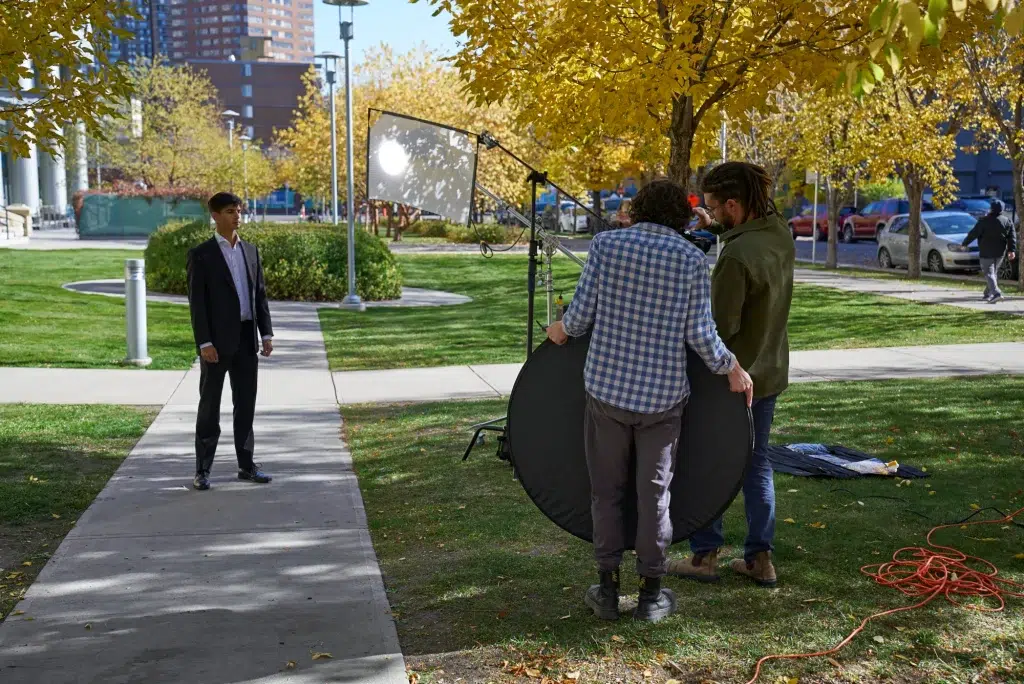
When you plan for batch video production, you can realistically create 15 to 30 usable assets from a single eight-hour shoot. The key is working not just with a videographer, but with a creative partner who can help you develop a strategy and then execute.
Here’s a realistic asset breakdown from a well-planned 8-hour shoot day:
| Asset Type | Quantity | Where It Lives |
| Hero brand video (2–3 min) | 1 | Website, pitch deck, events |
| LinkedIn video posts (45–90 sec) | 2-3 | LinkedIn feed |
| Instagram Reels / Shorts (15–30 sec) | 3-4 | Instagram, YouTube Shorts |
| Testimonial soundbite clips | 2-4 | Sales emails, social, website |
| B-roll footage packages | Ongoing | All future edits |
| Behind-the-scenes content | 3-5 clips | Social media, culture content |
| FAQ or talking-head short answers | 4-6 | Website, social, email |
How to Build a Video Content Library in One Day
To build a video content library in one day, you’ll need to combine meticulous pre-production, a high-output shoot, and post-production editing. Here’s a step-by-step of how to do it effectively.
1. Creative Pre-Production
Long before the cameras ever turn on, pre-production is where the groundwork is laid for creating a video content library.
Define Your Content Pillars Before You Write a Shot List
Start by grouping everything you want to include in your video content into 3 to 4 themes. These can include:
- Establishing your company culture
- Showcasing your expertise
- Highlighting the results clients see
- Showcasing your products and services
Each of these pillars can support several short videos rather than just being a single line in a script. By doing this, you create a library of usable content rather than just one video and some leftover b-roll. These pillars will shape the work that gets done on shoot day, informing the questions you ask in interviews, the b-roll you shoot, and even the set design.
Script & Prepare Talent in Advance
You don’t want to waste a minute of shoot day, especially when on-screen talent is involved. To make sure that doesn’t happen, prepare everything in advance. That’s a big part of what gets done in pre-production and can save you from real headaches once the cameras are rolling.
- Have scripts pre-loaded for a teleprompter
- Sequences should be mapped out
- On-camera talent should be briefed on what to expect, how long they’ll be needed, and the topics you cover
The more video shoot planning you do and the more prepared your talent feels, the better things will go on shoot day, and the more likely it is that you’ll wind up with a great video content library.
Plan for Platform Formats from the Start
Whether you’re looking for LinkedIn video content, Instagram Reels, or anything else, you should be planning to create short platform-specific footage. So, how do you do that?
- Capture both horizontal (16:9) and vertical (9:16) framing for the same moments where possible
- You want footage in your video content library that’s tailored for mobile formats. That can mean vertical clips for Reels and Shorts, or 15-30 second highlights and natural moments that viewers on social media can connect with
- Be sure to plan in advance which moments need multiple takes in different framings
Build Your Shot List Around the Smallest Assets First
This can seem counterintuitive, but planning for short clips before your hero video is a great way to ensure you end up with a useful video content library. Short clips have specific requirements, like tight framing and a strong hook, which can be easy to overlook on a one-day video shoot, while the hero video can be assembled from pieces planned for short-form use.
Assign Someone to Capture Behind-the-Scenes
Behind-the-scenes video content is extremely popular and can be a secret weapon in a business video content strategy. It doesn’t happen by accident, though, so designating either a crew member or a second camera to capture organic, fun social media video content can result in great footage.
It doesn’t have to be an all-day process, though. Even just 15 minutes of intentional attention during a shoot day can power weeks of social media video content. Behind-the-scenes footage strips away polished marketing and shows the real people behind your brand. That can build trust much more effectively than a perfectly-produced piece.
2. Run a High-Output Shoot
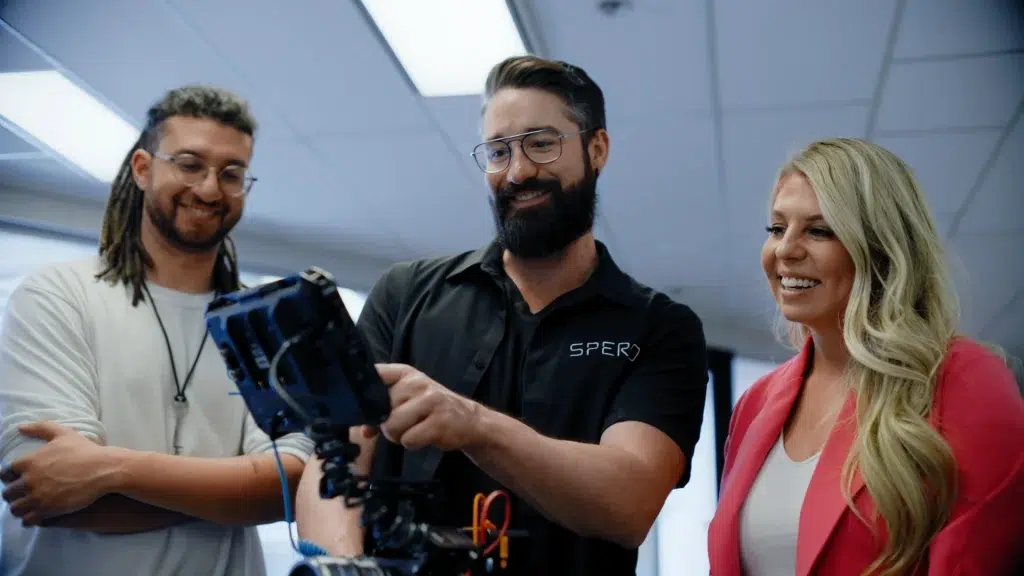
When you have a clear plan for your video content shoot, it gives you a map for how production day will go. Shoot days are fast-paced, and there’s often a lot going on at once, so having a video shoot day schedule ensures you’ll stay on track.
Structure Around Locations, Not Content Types
The single most important scheduling principle for a batch shoot day is to group everything by location rather than by content type. Every piece of content that needs to be filmed in a given space — hero footage, interview segments, b-roll, social clips — should be captured before the crew moves on. Resetting lighting and audio for a location you’ve already left costs time you don’t have.
A Realistic Eight-Hour Shoot Day Schedule
| Time | Activity |
| 7:00–8:00 AM | Crew arrives, lighting and audio setup, location check |
| 8:00–9:30 AM | Hero video principal photography—scripted segments and key interview footage |
| 9:30–10:30 AM | B-roll capture in first location—products, environment, team at work |
| 10:30–11:00 AM | Behind-the-scenes content—designated crew member captures organic moments |
| 11:00 AM–12:00 PM | Move to second location, reset lighting and audio |
| 12:00–1:00 PM | Testimonial interviews—back to back, same setup throughout |
| 1:00–1:30 PM | Lunch—talent released, crew reviews footage and flags best takes |
| 1:30–3:00 PM | Short-form specific footage — vertical framing, tight hooks, platform clips |
| 3:00–4:00 PM | B-roll capture in second location |
| 4:00–5:00 PM | Buffer time—unscripted moments, pickup shots, anything missed earlier |
A Few Rules That Keep High-Output Days on Track
- Shoot interviews back to back: Once your lighting and audio are set for an interview, keep them set.
- Keep the camera rolling between setups: Brief your crew to keep capturing even when nothing official is happening.
- Mark the best takes in real time: Having someone flag strong takes during the shoot saves significant time in post-production and reduces the risk of missing a great moment in hours of raw footage.
- Protect the buffer: The final hour of the schedule should be treated as sacred. It exists for pickups, unscripted moments, and anything that didn’t go to plan earlier in the day.
3. Post-Production: Turn Raw Footage Into a Content Library
Once you’ve got the footage, it’s time for post-production. This is where you’ll separate your clips to build your video content library, full of footage you can repurpose whenever you need it.
- The first step is editing your hero video. It’s the foundational piece that sets the narrative and tone and is the key piece of any video content strategy for business
- Next, cut down platform-specific versions that use the same interview footage. Come up with different hooks.
- Isolate the best 15-30-second sound bites2 from interviews. You can repurpose this video content for standalone testimonial clips.
- Package b-roll into reusable folders organized by theme. These can be used in every future edit and are a big part of your video content library.
- When you treat each and every video as a video content library full of assets, you dramatically maximize your video production ROI.
Read more about the Dynamic Process of Post Production.
One Day. One Shoot. Months of Content.
A single well-planned shoot day can power your video content strategy for months. But getting there requires more than a videographer — it requires a creative partner who starts with strategy, plans every asset before the cameras roll and knows how to turn raw footage into a library that keeps working long after the shoot wraps.
That’s exactly how Studio Spero approaches every production day. From content pillar planning and talent preparation through to post-production and platform-specific cuts, we build content libraries—not just videos.
Let’s plan your shoot day. Talk to Studio Spero today.
FAQs
Consistency matters more than frequency. For most businesses, two to four short-form video posts per week across platforms is a strong target. A well-planned one-day shoot producing 15 to 30 assets can realistically sustain that cadence for several months before a refresh is needed.
Video content batching is the practice of filming multiple pieces of content in a single shoot day rather than scheduling individual shoots for each video. By planning a library of assets from the outset (hero video, social clips, testimonials, b-roll), batching dramatically reduces the per-asset production cost and ensures a consistent visual identity across all content.
Not necessarily, but every piece of content needs a plan. Hero videos and explainers benefit from a full script or detailed teleprompter copy. Interview-based content works better with prepared questions and talking points rather than a word-for-word script. B-roll and behind-the-scenes content should have a shot list rather than a script.
Absolutely, in fact, smaller businesses often get more value from a batched shoot day than larger ones because the per-asset cost saving is proportionally greater. The key is thorough pre-production planning.