

You know what video you need. An explainer that shows how your product works. A case study that proves it delivers results. Maybe a brand video that makes you look credible.
Those are all valuable videos. But the right b2b video marketing strategy matters when it comes to driving revenue.
Companies regularly want a demo video before they’ve properly built awareness. A video case study before they’ve explained what they do. A founder’s message when what they actually need is a 30-second answer to “why does this matter?”
In B2B, where buying cycles stretch across months and regularly involve eight people you’ll never meet, the order and design of your content matters.
That’s why many companies struggle: their video content doesn’t help their prospects move forward in the buying journey. Video works when it gives your buyer clarity exactly when they need it. When it removes the friction that stalls deals or pushes prospects away.
In this article, we outline the most useful B2B video formats and organize them by where they typically fit in your funnel. It’s worth noting that many of these formats can show up at multiple stages depending on how you use them. We’ve placed each one where it tends to do its best work. Understanding this will help you optimize your marketing spend.
Key Takeaways
- B2B buyers now complete more than half of their research independently before engaging with sales – video is one of the most effective ways to reach them during that process.
- The format of your B2B marketing video matters less than where it sits in the funnel – the right video at the wrong stage won’t move buyers forward.
- Short-form educational clips consistently lead all formats for early-funnel engagement and ROI, with videos under 30 seconds seeing 38% higher completion rates on LinkedIn.
- Product demo and explainer videos are among the highest-converting mid-funnel assets. Instructional videos in the 3-5-minute range achieve a 74% engagement rate, compared to 43% for other formats.
- Video testimonials convert at 44% at the decision stage compared to 21% for videos without social proof – making customer case studies essential for closing deals.
- Personalized one-to-one sales videos outperform text-only outreach in reply rates and meetings booked, and work across cold outreach, deal recaps, and renewals.
- B2B companies that see real results from video identify the biggest gap in their buyer journey and close it first.
- A strong B2B video marketing strategy maps content to each stage of the funnel: awareness, consideration, and decision.
What Is B2B Video Content?
B2B video content covers everything from a 30-second LinkedIn clip that introduces your brand to a 5-minute product demo that answers a prospect’s last objection before they sign. It’s any video whose primary job is moving a business buyer forward.
Why B2B Video Matters Now
In 2026, your buyers are doing most of their homework before they ever talk to you. Most B2B buyers now complete more than half of their research on their own, comparing options, watching demos, and building internal consensus with their stakeholders.
B2B video content marketing gives buyers a way to self-educate before they ever talk to sales. Video has become one of the preferred ways to do that research because it’s faster to absorb, easier to revisit, and easier to share with the person who needs to sign off.
Video becomes a self-serve education layer that sits upstream of sales. It helps buyers understand you before they’re ready to engage with you.
Why Video Beats Static Content for Complex Decisions
B2B purchases aren’t impulse buys. They come with risk. There are internal conversations you’ll never hear. Hesitation you won’t see. And there’s often someone in the room who needs to be convinced twice before they’ll move forward.
Buyers consistently report higher understanding and confidence when complex ideas are explained through video instead of text alone. Video carries tone. It shows intent. It reduces the ambiguity that kills deals.
Top of Funnel: Building Awareness and Interest

These B2B marketing video formats answer the question: “Why should I care?” They’re designed for people who don’t know you yet or barely understand what you do.
1. Short-Form Educational and How-to Clips
These are short, focused videos that tackle specific questions your buyers are asking. Usually under a minute. Sometimes a little longer if the topic demands it.
Short-form video consistently leads all formats for engagement and ROI in B2B, especially early in the buying journey. It works because it respects time while delivering value quickly. Video lets you explain in 45 seconds what would take three paragraphs to write and twice as long to read.
On LinkedIn, videos under 30 seconds see 38% higher completion rates than longer posts. That’s not because people have short attention spans. It’s because they’re scrolling on their phone between meetings, and you have one shot to say something useful before they move on.
These B2B marketing videos typically perform best on platforms like LinkedIn, YouTube Shorts, and in email follow-ups. They work when they address real questions your buyers are already asking.
The most common failure here is talking without helping. Give people something they can actually use. A framework they can apply. A mistake they can avoid. A decision they can make with more confidence.
2. Signature Brand Videos
This is the video that lives on your homepage. It tells people who you are and what you stand for while establishing tone and personality. A strong brand video makes someone feel something about working with you before they ever talk to sales.
The best signature brand videos often don’t lead with features. They lead with the world you’re trying to create or the problem you care about solving. Or your attitude. Dollar Shave Club’s launch video is one of the gold standards here. It wasn’t just about razors. It was about calling out an entire industry for overcomplicating something simple. That video got tens of millions of views and built a brand because it had a bracing point of view.
The challenge here is balance. You need to communicate what you do without turning it into a feature list. You need to show emotion without losing clarity. And you need to do it in under ninety seconds, because that’s about how long you have before someone clicks away.
When signature brand videos work well, people leave your site remembering you instead of confusing you with your competitors.
3. Feed-Optimized Paid Social Video Ads
Paid video works when it’s designed for the feed it appears in. Platform-native video consistently outperforms repurposed brand content in completion and engagement.
Strong hooks. Fast clarity. A clear reason to keep watching.
You’re looking for what stops the scroll and what keeps people engaged past the first three seconds. Many ads fail because they take too long to get to the point – or because they feel like interruptions instead of content.
Middle of Funnel: Building Understanding and Consideration

These formats answer the question: “How does this actually work?” They’re for people who know what you do and are trying to figure out if it’s right for them. This is where b2b video production decisions – length, format, whether to animate or shoot live – actually matter most.
4. Product Demo and Explainer Videos
B2B product videos that show how something actually works consistently improve conversion rates and shorten sales cycles when placed on high-intent pages. They answer questions before meetings happen. They remove uncertainty before it becomes an objection.
These videos belong on homepages, product pages & pricing pages, and during inside sales conversations. Screen recordings with clear narration often work well here. The goal is to show the actual product in action, walking through real workflows or use cases that mirror what your buyers will experience.
The failure mode is staying too high-level or abstract. Show the interface. Walk through the steps. Let people see themselves using it.
Instructional videos hold attention better than almost any other format. When Wistia analyzed their data, they found instructional videos in the 3-5 minute range get a 74% engagement rate compared to 43% for other video types at the same length (Source: Wistia State of Video Report). People will watch you show them how to do something. They won’t stick around to hear you talk about doing something.
5. Interactive Product Tours and Click-Through Demos
These aren’t traditional videos as much as they’re self-guided experiences where prospects can click through your product, explore features, and interact with the interface without signing up or talking to sales.
Think of it like a playable demo. Instead of watching someone else use your product, the buyer controls what they see and how deep they go.
Interactive demos are still early, but the upside is real. In certain categories, they’re converting at several times the rate of static product pages. They make sense for self-serve-friendly buyers and product-led motions.
The tradeoff is maintenance. These require upkeep and coordination between marketing, product, and sales. When done poorly, they create more friction than they remove.
If your product is simple enough to explore in five minutes and your buyers prefer to kick the tires themselves, this format is worth testing.
6. Webinars, Virtual Events, and Their Clips
Webinars aren’t exciting. But they’re effective.
When done well, they consistently generate high-intent leads, especially when paired with a clear follow-up sequence. Their real value isn’t just the live event. It’s the ecosystem of content that comes from it.
One session can produce dozens of assets. Short clips. Blog content. Sales enablement. Social posts.
The failure mode here is forgetting the second half. No follow-up. No distribution. No plan beyond the calendar invite. If you’re going to run a webinar, treat it like the beginning of a campaign, not the end of one.
In fact, if you just put a lead gen form at the end of a 60-minute webinar, 65% of people who make it to the end will fill it out (Source: Wistia). That’s not a typo. People who sit through an hour of your content are highly qualified. Don’t let them walk away without a next step.
7. On-Site FAQ, Onboarding, and Support Videos
These videos rarely get celebrated, but they quietly protect revenue at every stage of the journey, including after the sale.
FAQ videos on a pricing page help prospects make decisions. Feature explainers in a sales proposal remove last-minute objections. Onboarding videos reduce the anxiety of a new client trying to figure out what comes next. Support videos keep existing customers confident and reduce the load on your team.
Short, contextual, and placed exactly where confusion tends to appear. If someone has to hunt for the answer, the video isn’t where it needs to be.
8. Founder and Executive POV Videos
When leadership shows up consistently and talks about real problems, people pay attention.
Leader-led content earns higher engagement on professional platforms when it’s grounded in customer reality, not company updates. These videos build trust. They humanize the brand. They signal that someone with authority actually understands what buyers are dealing with.
They work best once clarity is already established elsewhere. If people don’t know what you do yet, a founder video about industry trends won’t help. But if they’re already interested and trying to figure out if you’re credible, this format moves the needle.
Bottom of Funnel: Closing Deals
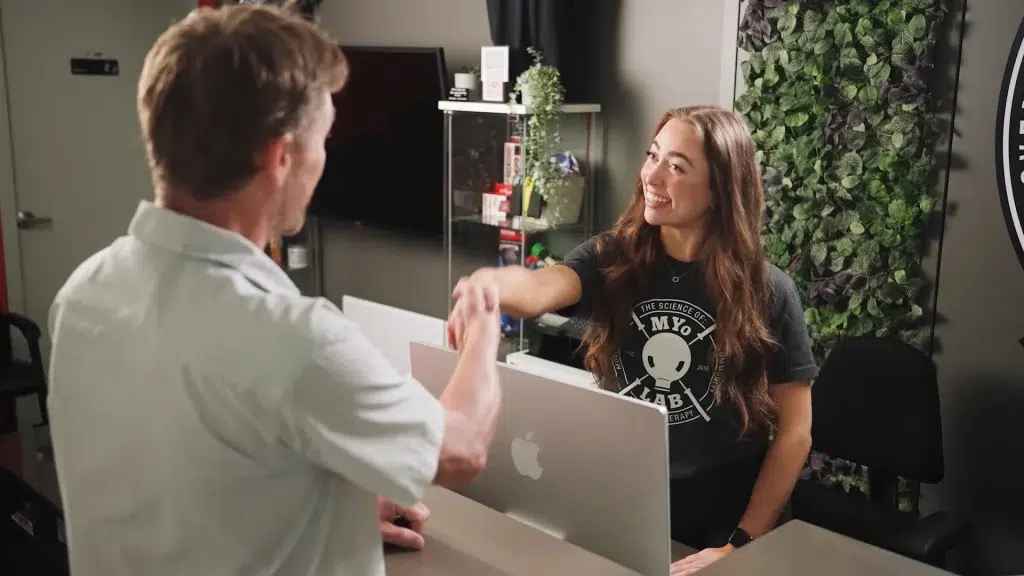
If you’ve been wondering how to use video content to drive B2B leads, this is the stage where it becomes most measurable. These formats answer the question: “Can I trust this will work?” They’re for people who are close to deciding and need reassurance or proof.
9. Customer Testimonial and Case Study Videos
Testimonials matter most once a buyer understands what you do. Before that, they’re noise.
Social proof is most influential late in the decision process, especially when multiple stakeholders need reassurance. These videos help buyers justify decisions internally. They provide cover.
The data backs this up: video testimonials convert at 44% at the decision stage. Videos without testimonials? 21%. That gap isn’t small.
The strongest testimonials follow a simple arc. What was the problem? Why did the change matter? What happened afterwards?
Citing specific outcomes is important here. “It was great” doesn’t help anyone. “We cut onboarding time by 40%” does.
And here’s something else worth knowing: B2B buyers are 44% more likely to share a product video with colleagues than a brochure. When someone forwards your case study video to their team, you’ve just entered a conversation you’ll never see. But that’s where deals actually close.
10. Personalized Sales and Outreach Videos
Short one-to-one videos outperform text-only outreach in reply rates and meetings booked. They feel human. They cut through noise.
These also work across the funnel. Cold outreach. Deal recaps. Renewals. Expansion.
They fail when they feel templated. The moment they stop sounding like a person talking to another person, they stop working.
Record a quick Loom. Make it clear you actually looked at their situation instead of copy-pasting a pitch.
This works because it’s rare. Most people won’t bother. That’s your advantage.
How to Build a B2B Video Marketing Strategy That Fits Your Funnel
If you’re not sure where you need video most, here’s a diagnostic:
- Can someone land on your homepage and understand what you do in 30 seconds? If not, you might need a signature brand video.
- Are prospects asking the same questions in every sales call? Build short-form clips that answer those questions before the meeting.
- Are deals stalling because buyers can’t visualize how your product works? You need a demo video on your product pages.
- Are you losing deals to competitors who feel more credible? Case study videos give prospects the proof they need to say yes.
Know the Gap. Close It with Video.
The companies that see real results from video don’t try to do everything at once. They identify the biggest gap in their buyer journey and close it. Then they move to the next one.
If you need help figuring out where video fits in your funnel, we can help. We work with B2B companies to map video opportunities across the buying journey and create the content that actually moves your buyers forward.
Let’s talk about what that could look like for you.
Book a meeting today.
FAQs About B2B Video Marketing
A B2B video marketing strategy is a plan for using video to move business buyers forward at every stage of the funnel, from the moment they first hear about you to the moment they sign. It’s more than just about what videos you make. It’s also about which format belongs where, and why. The companies that get real results from video aren’t necessarily making more of it. They’re making the right video at the right stage.
It depends on where in the funnel you’re trying to generate them. Short-form educational clips and webinars tend to drive the most top-of-funnel leads. Product demos and explainers convert mid-funnel prospects who are already evaluating you. Testimonial and case study videos close the gap at the bottom, where buyers need proof before they’ll commit. The mistake most teams make is investing heavily in one format and ignoring the others.
It varies widely depending on format, length, and who you work with. A simple screen-recorded product demo costs far less than a polished brand film. A personalized sales video costs nothing but ten minutes of someone’s time. The more useful question is what a video needs to accomplish. Once you know that, the right format and budget usually follow. If you’re not sure where to start, a short discovery conversation can save you from spending in the wrong place.
B2C video is built to create desire and trigger fast decisions. B2B video is built to reduce risk and build trust across a longer buying process that often involves multiple decision-makers. The emotion is different too. B2C wants excitement. B2B wants confidence—the feeling that choosing you is the safe, smart call. That shift in objective changes everything about how you write, shoot, and distribute your videos.
Start with where the deal is stalling, not with what looks impressive. If prospects don’t understand what you do, you need a brand or explainer video. If they understand but aren’t converting, you need demos and case studies. If your sales team is doing the same education call over and over, you need short-form clips that answer those questions before the meeting. The format is almost never the problem. The gap in your funnel is.