

The right gear can make a video look great. The right creative direction ensures your video has a story that’s worth telling. When companies come to work with professional videographers in Calgary, they’re often focused at first on making sure our team has the best, most high-tech equipment. And while we do, there’s more to making an amazing corporate video than just having the best equipment. Creative direction is at the heart of it.
Here, we’ll look at what creative direction actually means and why it’s so important for corporate videos.
Key Takeaways
- Creative direction provides the framework for your video’s story—it shapes messaging, defines format, and ensures every element serves the same goal
- The choice between interview-led and narrative-driven storytelling is one of the first and most important creative decisions, and depends entirely on what your brand is trying to achieve
- Showing and saying perform different roles—creative direction finds the right balance between what’s spoken and what’s demonstrated through footage
- Location, music, and pacing aren’t afterthoughts; each communicates something to viewers and should be built into the creative process from the start
- Without creative direction, even well-shot footage tends to produce an assortment of clips that don’t add up to a coherent story
- Studio Spero’s Signature Package includes collaborative creative direction at every stage from discovery through post-production
What Is Creative Direction in Corporate Video?
Creative direction is at the foundation of everything that makes a corporate video work. It provides a framework for the story you’re trying to tell, shapes the messaging so it aligns with your brand goals and determines how your video can best appeal to its target audience.
Many companies have general ideas of what they’re looking to achieve with their videos, but need help refining their ideas and telling a compelling story. Creative direction takes those ideas and shapes them into something cohesive in a few key ways:
- Discovery: Where you’ll meet with videographers, and they’ll define your goals and objectives and begin crafting a video concept.
- Storyboarding: Where scenes will be visualized.
- Crafting scripts: Where the story of your video takes shape.
- Location scouting: Where sets and locations are found and booked.
- Audio and visual elements: Creative direction determines how what you see and what you hear will elevate your story.
What Creative Direction Decisions Actually Look Like in Practice
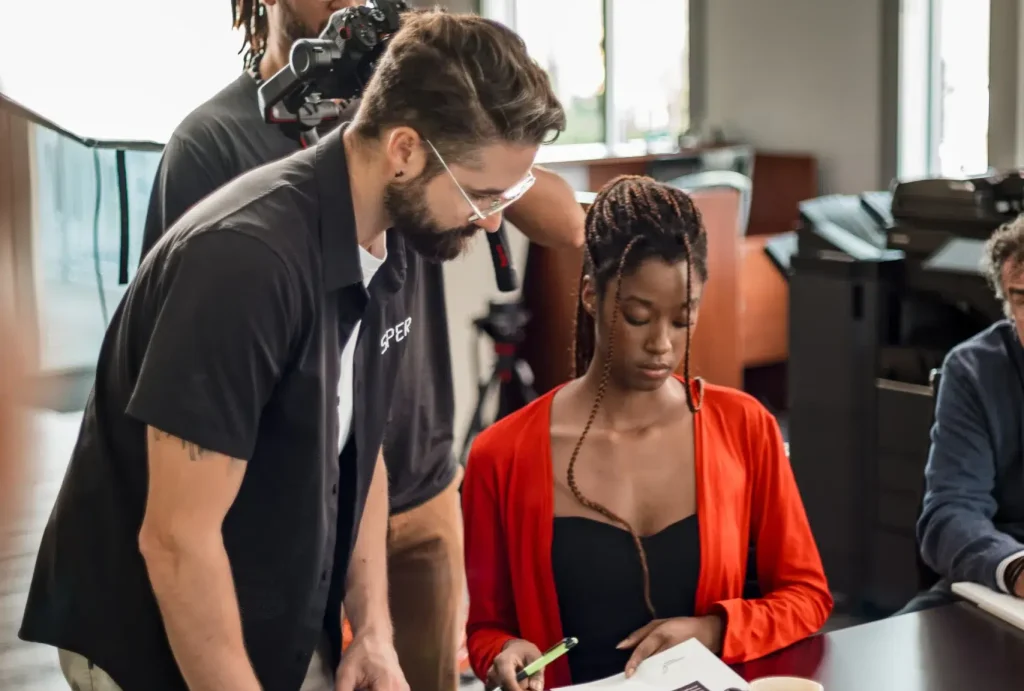
Interview-Led vs. Narrative-Driven Storytelling
Interview-led videos can be packed with information, feel credible, and follow a straightforward format. There’s a reason why testimonial videos are such a popular pick for corporate videos, and it’s because the messaging is delivered clearly, concisely and in a format that’s easy for anyone to understand.
Narrative-driven videos have their own advantages, though, and can often be more compelling for viewers. Creating direction will help you formulate a story with a beginning, middle, and end that draws viewers in and creates an emotional connection.
Both formats work, but with strong creative direction, you can choose which one best serves your brand’s goals.
What to Show vs. What to Say
There’s an impulse among many brands to just use talking-head footage to deliver their message. It keeps things simple and avoids miscommunication.
But saying and showing perform different roles. Saying provides information, showing gives people evidence they can see with their own two eyes. Finding the right balance is crucial, and creative direction will work to audit a script and hone in on what can be shown through video rather than just stated in words.
This can include shooting b-roll so that your corporate video has the right video footage to accompany its script, ensuring a final product that delivers its information effectively on multiple levels.
Real Employees vs. Hired Talent
Hiring actors to come in and read scripted interviews guarantees that you’ll get perfect line-reading and photogenic people on screen. There’s an authenticity that comes with using real employees for testimonials that just can’t be matched, though.
Using real employees is often best for corporate videos that focus on:
- Company culture
- Recruitment
- Client experience
A creative director will help you strike a balance between the polished product you’ll receive with hired talent and the use of real employees whose authentic experiences can help audiences connect more with your corporate video.
Location Choices & What They Communicate
The location you choose to shoot your video tells a story unto itself. A pristine corporate boardroom signals professionalism. A workshop floor shows craftsmanship. Drone shots of your business in your city communicate local pride.
Location is so much more than just a background; it situates the story you’re trying to tell in a real space that viewers inherently understand. The best creative direction understands how important a location can be and will scout for the best possible option to enhance the story your brand is trying to tell.

Music Selection & How It Shapes Emotional Response
Music should never be treated like an afterthought for corporate videos. It’s a vital element that sets the tone and can trigger emotional responses from viewers. Too often, companies don’t think about what music should accompany their videos until the very end, and that’s a mistake.
Creative direction ensures that the music is an organic part of the final product you’re creating. It should be included early in the process and inform decisions about the visuals you shoot.
Pacing: When to Cut, When to Hold a Shot
To hold a shot or to cut quickly? It’s a decision people don’t often think about until they’re working on a corporate video. Quick cuts can feel energetic and dynamic, while longer shots can feel more deliberate and thoughtful.
The right answer will depend on the specifics of your video, but creative direction will ensure the pace matches the energy and vibe you’re trying to communicate.
What Happens Without Creative Direction
Even if you’re using the very best camera equipment, a video simply won’t come together the way you want without creative direction. Instead of a coherent, professional corporate video, you’ll wind up with an assortment of shots that don’t really add up to anything coherent.
Creative direction ensures every element of your corporate video is carefully planned and shot with the same goal in mind. From storyboarding to scripting to music selection, creative direction is an essential part of video production services.
It’s where the professional videographers at Studio Spero shine. Our Signature Package, in particular, offers collaborative creative direction at every step of the video production process, starting with the initial discovery meetings and extending through pre-production meetings, production day itself, and the editing done in post-production.
Set Your Brand Apart with Studio Spero
Creative direction is an essential part of creating top-quality corporate videos. Our team excels at collaborating with clients and providing the creative direction that results in stunning corporate videos.
Chat with us about what you have in mind for your corporate video, and we’ll tell you how we can help.
FAQ
This depends on what music you’re looking to use, but music licensing generally costs between $100 and $500.
Many companies aren’t sure what they want, but Studio Spero’s team will meet with you to craft an idea and create scripts and storyboards that align with your brand’s goals.
Generally speaking, for testimonial videos, you want employees to speak from the heart and authentically recount their experiences. Meeting with them beforehand and going over talking points is a great way to ensure they say what’s needed for your corporate video, but still speak authentically.